

How to Choose the Right Tires for Your Vehicle
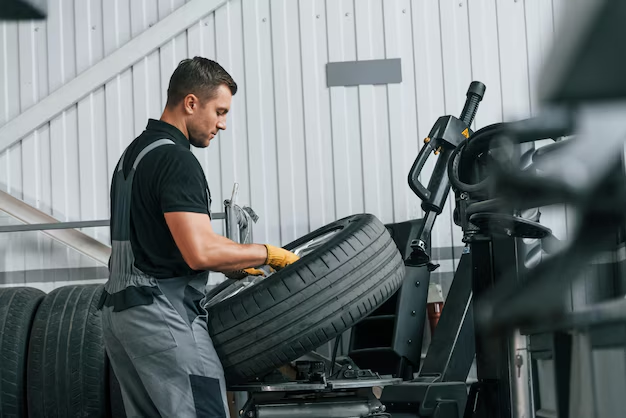
You probably don’t think about your tires that often—until you have a flat, your tread wears thin, or the car starts handling like it’s skating on marbles. But here’s the truth: choosing the right tires is one of the most important decisions you can make for your vehicle. It impacts everything from your safety and fuel efficiency to how smoothly your car handles curves and climbs.
At Big Sky Tire & Repair in Deming, NM, we’ve seen it all—drivers with worn-out tread, mismatched tires, and folks unsure what all those sidewall numbers even mean. If that sounds like you, don’t worry. We’re here to walk you through how to pick the right tires for your vehicle without the jargon, the upsell, or the confusion.
Why Tires Matter More Than You Think
Let’s start with the basics: tires are the only part of your car that actually touch the road. No matter how powerful your engine is or how tuned your suspension may be, your tires translate all of that performance into real-world results.
But the wrong tire? That can mean:
- Poor traction in rain or snow
- Decreased fuel efficiency
- Faster wear and tear
- Longer stopping distances
- Increased risk of blowouts
And while you might think all tires are created equal, there are huge differences based on season, terrain, driving style, and even your specific vehicle.
Know Your Tire Types
There’s no one-size-fits-all solution, so let’s break down the main types of tires you’ll run into:
All-Season Tires
These are the go-to choice for most drivers in temperate climates. They offer a balanced mix of performance, longevity, and comfort. But keep in mind—they’re a compromise. If you live in an area with extreme winters or you push your vehicle’s performance, they might not be the best fit.
Winter (Snow) Tires
Don’t be fooled by the sun in New Mexico—if you’re heading into the mountains or traveling up north during colder months, winter tires can save your trip. They’re made from a special rubber compound that stays flexible in freezing temps and grips icy roads like a champ.
Summer Tires
Designed for performance, these tires handle heat, speed, and dry pavement like pros. They’re common on sports cars and high-performance sedans, but they don’t play well with cold weather or slick roads.
All-Terrain & Mud-Terrain Tires
If you drive a truck or SUV and like taking the scenic route—think gravel, sand, or off-road trails—these tires offer beefier tread and more durability. Just know they can be noisier and wear faster on paved roads.
Touring & Performance Tires
Looking for comfort and quiet on the highway? Touring tires are built for long-distance cruising. Performance tires, meanwhile, are tuned for grip and control at higher speeds—great for the weekend warrior who enjoys hugging corners.
Read Your Sidewall Like a Pro
You’ve seen it: a bunch of numbers and letters printed on the side of your tire. Here’s how to decode the essentials:
Example: P215/65R16 95H
- P = Passenger vehicle (LT for light truck, etc.)
- 215 = Tire width in millimeters
- 65 = Aspect ratio (height of sidewall as % of width)
- R = Radial construction (almost all modern tires are radial)
- 16 = Diameter of the wheel in inches
- 95 = Load index (how much weight each tire can carry)
- H = Speed rating (how fast your tires can safely go)
Not sure what these numbers mean for your ride? Our Big Sky Tire & Repair crew can walk you through it during your next regular check-up or tire rotation.
Match the Tire to Your Driving
Everyone drives a little differently. Some of us have long highway commutes, others stick to the backroads. Here’s how to factor in your own driving habits:
- Daily commuter? Look for all-season or touring tires with long tread life and low rolling resistance for better fuel economy.
- Weekend off-roader? All-terrain or mud-terrain tires can give you the grip you need, especially when paired with 4×4 or AWD.
- Aggressive driver or performance car owner? Consider performance or summer tires designed for high-speed cornering and short braking distances.
- Frequent traveler to colder regions? Keep a separate set of winter tires or go for an all-weather hybrid for versatility.
The Tread Matters
When choosing new tires, don’t ignore the tread pattern—it’s more than just aesthetic. Different treads offer specific advantages:
- Symmetrical Tread: Quiet and long-lasting. Great for daily driving.
- Asymmetrical Tread: A mix of dry and wet performance zones, ideal for variable conditions.
- Directional Tread: Designed for high-speed stability and water evacuation, but must be installed in a specific direction.
Also, check the treadwear rating (usually found on the tire’s sidewall or product description). A higher number means longer life, but that might come at the cost of grip.

Watch Out for These Common Mistakes
Let’s clear the air on a few things we see far too often in the shop:
- Mismatched Tires: Running two different types or sizes of tires can throw off your vehicle’s balance, especially in all-wheel-drive systems. Always try to replace tires in pairs (front or rear) or ideally, all four.
- Overlooking Load Rating: If you’re towing a trailer or carrying heavy equipment, make sure your tires can handle the weight.
- Ignoring Age: Even if your tire tread looks okay, rubber degrades over time. If your tires are more than 6 years old, it might be time to replace them.
- Buying Cheap Online Without Guidance: We get it—deals are tempting. But unless you’re 100% sure the tire fits your driving needs and your car’s specs, it’s easy to make a costly mistake.
Don’t Forget the Rest of the Package
Choosing the right tires is just the beginning. To really protect your investment, pair them with proper tire maintenance:
- Tire Rotations: Prevent uneven wear by rotating tires every 5,000 to 7,000 miles.
- Balancing: Avoid vibration and premature wear.
- Alignment Checks: Misalignment can ruin new tires fast.
- Air Pressure: Check monthly. Underinflated tires kill mileage and wear unevenly.
If you’re unsure how to do all this yourself—no shame there—our team at Big Sky can handle it during a scheduled visit or even through our mobile tire service if you’re stuck or on the go.
Consider Your Engine Too
This might surprise you, but your engine’s condition can influence how quickly your tires wear. A poorly running engine can cause vibrations or uneven torque that stresses your tires in weird ways.
That’s why at Big Sky Tire & Repair, we don’t just swap out rubber—we’re your one-stop shop for engine repair, check engine diagnostics, and routine engine maintenance. When your whole vehicle is running smoothly, your tires last longer, and your ride feels better.
So if you’ve been putting off a DIY oil change that didn’t go quite right, or ignoring a check engine light that’s been blinking since spring, it might be time for a regular check-up with the pros.
The Bottom Line
The right tires can transform the way your vehicle drives. But the “right” choice depends on more than just price—it’s about your lifestyle, your car, and how well the rest of your vehicle is maintained. At Big Sky Tire & Repair, we take the time to get to know all three.
Whether you’re tackling the backroads of Luna County or just commuting across town, you deserve tires—and service—you can trust.
Ready to upgrade your ride? Come by Big Sky Tire & Repair in Deming, NM, or give us a call. Our friendly, experienced team will help you pick the perfect set of tires, schedule that overdue check-up, and keep you rolling with confidence.