

7 Mistakes You’re Making with Your Tires in the Deming Heat (and How to Fix Them)
You know that feeling when you step out of your house in July, and the heat hits you like a physical wall? In Deming, the sun doesn’t just shine; it bakes. While you’re cranking the AC and reaching for a cold drink, your tires are doing something much more difficult. They are gripping asphalt that can easily reach 140 degrees Fahrenheit, supporting thousands of pounds of vehicle weight, and rotating thousands of times per mile.
The high desert environment of New Mexico is notoriously unforgiving on rubber. Whether you’re commuting to Las Cruces, hauling equipment across the ranch, or navigating the daily school run, your tires are under constant thermal stress. Unfortunately, most drivers are making a few critical mistakes that turn “normal wear” into “premature failure.”
At Big Sky Tire & Repair, we see the results of these mistakes every day. From shredded tread on I-10 to cracked sidewalls on ranch trucks, many of these issues are preventable. Here are the seven most common mistakes you might be making with your tires in the Deming heat and exactly how to fix them before they leave you stranded.
1. Trusting Your “Tire Pressure Light” as a Primary Gauge
Many modern vehicles come equipped with a Tire Pressure Monitoring System (TPMS). It’s a great safety feature, but relying on it as your only check is a dangerous game in the heat.
The Problem: The TPMS light usually only triggers when your pressure is significantly low: often 25% below the recommended PSI. In the Deming heat, air expands. A tire that is dangerously under-inflated in the cool morning might “expand” enough during a hot afternoon drive to keep the light off, even though the tire is structurally struggling.
The Consequence: Under-inflated tires have more “flex” in the sidewall. This flexing creates internal friction, which generates even more heat on top of the desert sun. This is the primary recipe for a catastrophic blowout. Conversely, over-inflation (caused by the sun heating the air inside) reduces the tire’s contact patch with the road, leading to poor handling and “center-wear” on your treads.
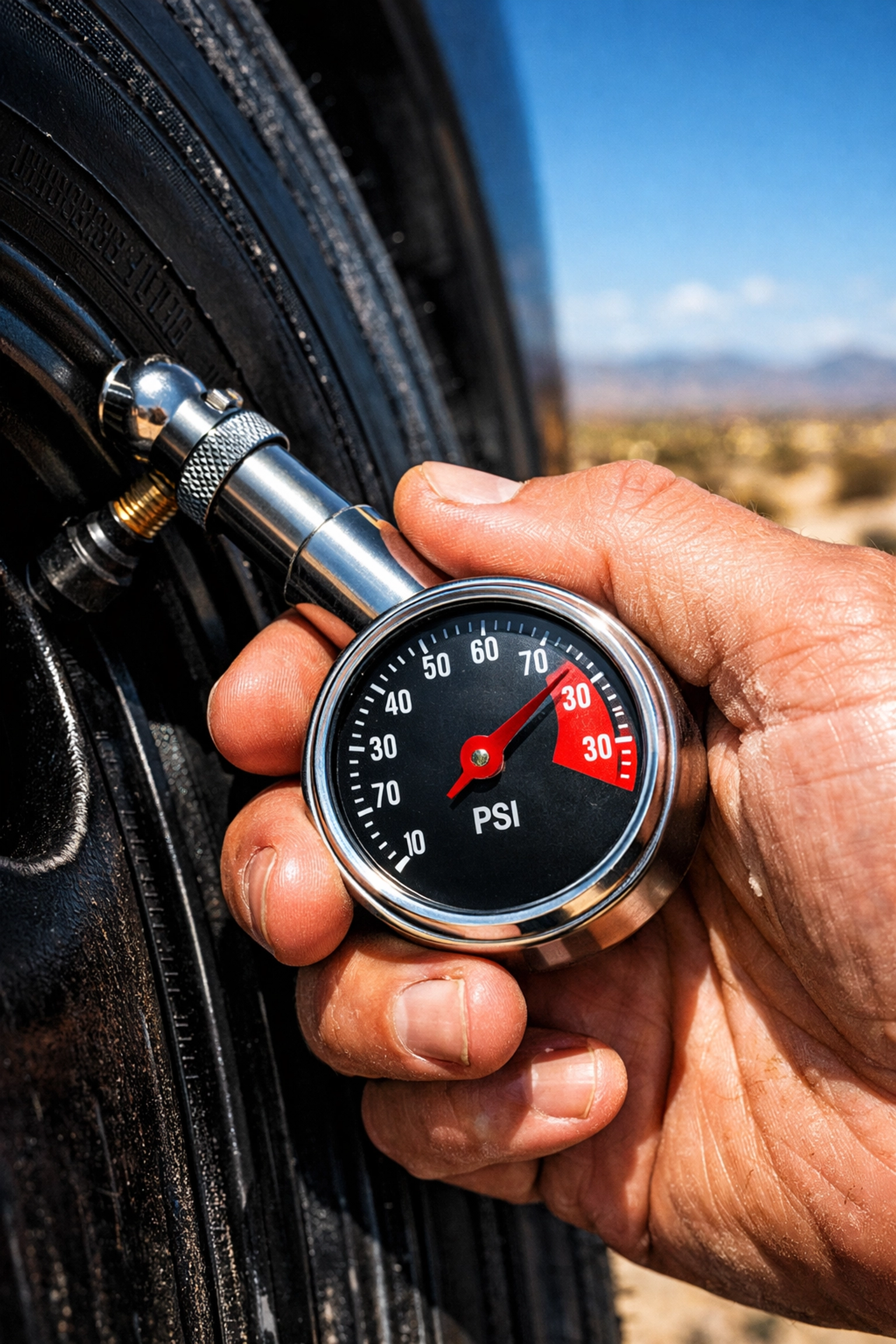
The Solution: Use a manual pressure gauge once every two weeks. Check your pressure in the morning when the tires are “cold” (before driving). Follow the PSI listed on the sticker inside your driver-side door, not the maximum PSI listed on the tire itself. If you aren’t sure what your vehicle needs, stop by our tire shop deming nm for a quick, professional check.
2. Ignoring “Sun Checking” and Dry Rot
In the high-altitude sun of New Mexico, UV radiation is intense. It doesn’t just give you a sunburn; it literally breaks down the chemical bonds in your tire’s rubber compound.
The Problem: This process, known as “dry rot” or sun checking, causes the rubber to lose its elasticity. You’ll start to see tiny spiderweb-like cracks on the sidewall or between the tread blocks.
The Consequence: Brittle rubber cannot handle the expansion and contraction that comes with heavy use. As the rubber loses its grip on the internal steel belts, the risk of tread separation increases. If you’re hauling a heavy trailer or working on a ranch, a dry-rotted tire can fail under the slightest bit of extra stress.
The Solution: Inspect your sidewalls regularly for fine cracks. If the cracks are deep enough to see the inner cord, the tire is unsafe. To prevent this, try to park in the shade whenever possible and avoid “tire shine” products that contain petroleum distillates, which can actually accelerate UV damage. For those working with heavy equipment, we offer specialized agricultural tires deming nm designed to withstand these harsh conditions.
3. Postponing Your Wheel Alignment
The roads around Deming: from the highways to the bumpy rural tracks: can be tough on your suspension. When your alignment is off, your tires aren’t rolling straight; they are being “scuffed” across the pavement.
The Problem: Misalignment causes the tire to drag slightly sideways as it rolls. In the 100-degree heat, that extra friction turns the tire into a literal sanding block.
The Consequence: You’ll notice “feathering” or uneven wear on one edge of the tire. Because the heat makes the rubber softer and more pliable, a bad alignment can ruin a brand-new set of tires in just a few thousand miles. You’ll also experience decreased fuel efficiency and a “pull” in your steering wheel.
The Solution: Get a professional wheel alignment deming nm at least once a year, or immediately if you hit a significant pothole or notice your steering wheel is off-center. Keeping your wheels aligned ensures the heat is distributed evenly across the tread, extending the life of your investment.

4. Forgetting the “Fifth Wheel” (The Spare)
When was the last time you checked the air pressure in your spare tire? If you’re like most people, the answer is “never.”
The Problem: Spare tires are often tucked away in the trunk or mounted underneath the vehicle, where they bake in the ambient heat without any ventilation. Over years of neglect, the air seeps out and the rubber degrades just like your active tires.
The Consequence: Imagine being stuck on the side of Highway 180 with a flat. You go through the work of jacking up the car, only to realize your spare is flat or so dry-rotted that it can’t hold the weight of the car. Now, a simple tire change has turned into an expensive tow.
The Solution: Every time you get a tire rotation or check your pressure, check the spare. If your spare is over six years old, it should be replaced, even if it has never touched the ground. If you do find yourself in a bind with a failed spare, our roadside assistance deming nm can get you back on the road quickly.
5. Overloading Your Vehicle in High Temperatures
Whether you’re moving house or transporting supplies for a ranching project, it’s easy to push your vehicle to its weight limit.
The Problem: Every tire has a “load index”: a maximum weight it can safely carry. When you combine a heavy load with the extreme Deming heat, the internal temperature of the tire skyrockets.
The Consequence: Overloading causes excessive sidewall flexing. In high heat, the structural adhesives that hold the tire together can weaken. This often results in a sudden, violent blowout rather than a slow leak.
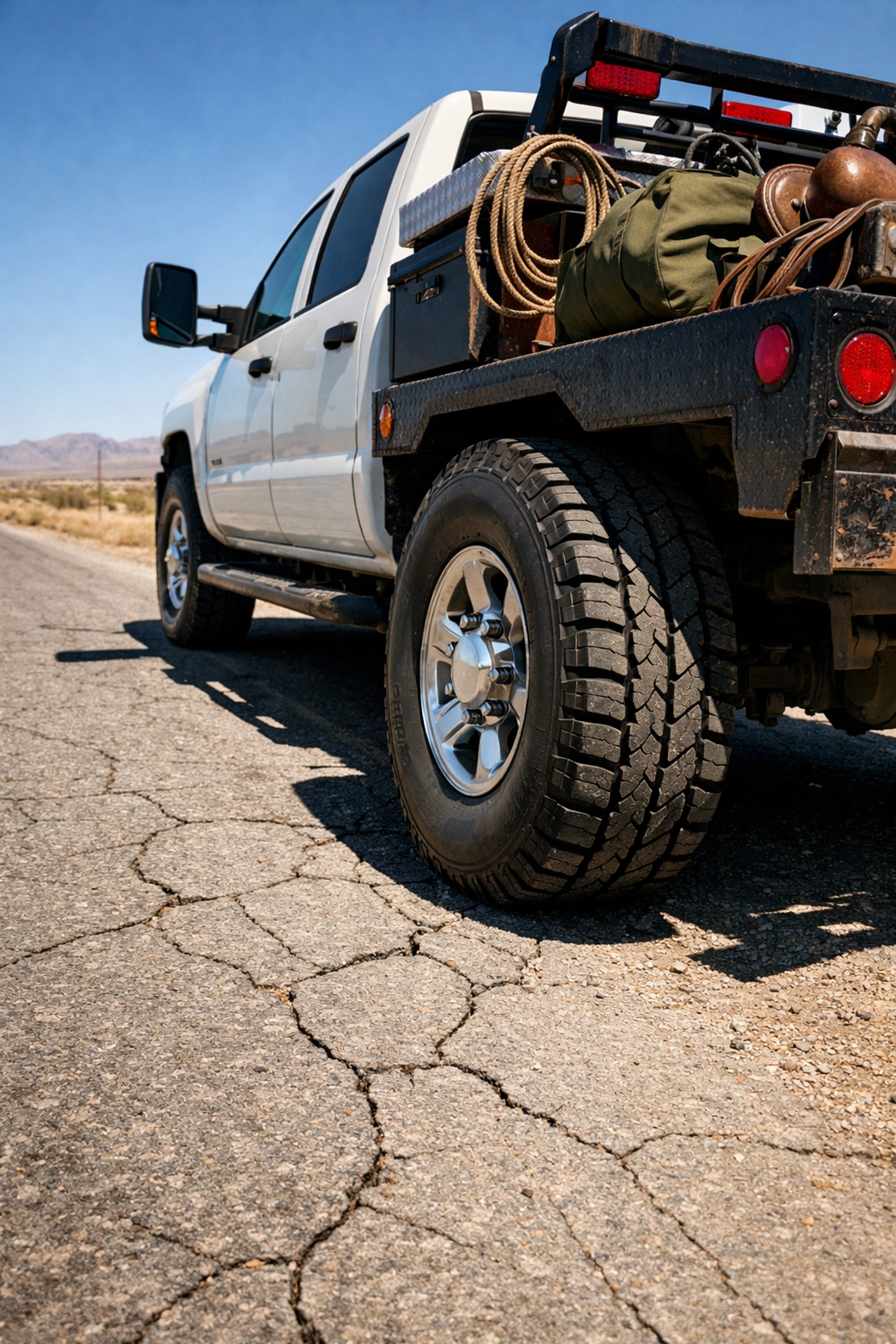
The Solution: Check your vehicle’s load capacity (found in the owner’s manual) and your tire’s load index. If you are regularly hauling heavy loads or operating OTR (Off-The-Road) equipment, ensure you are using tires rated for that specific work. We specialize in off-the-road otr tires deming nm to ensure your heavy-duty vehicles can handle the pressure.
6. Using the “Penny Test” Alone for Safety
The old “penny test” (inserting a penny into the tread to see if it covers Lincoln’s head) is a classic DIY check, but it doesn’t tell the whole story in a hot climate.
The Problem: Tread depth is about more than just avoiding hydroplaning in the rain (though we do get those sudden monsoon downpours!). Tread also acts as a heat sink. Thinner tread means there is less rubber to dissipate the heat generated by the road.
The Consequence: A “bald” tire runs much hotter than a tire with deep tread. In the Deming sun, that extra heat can lead to the rubber literally chunking off or the tire losing its structural integrity during a long highway drive.
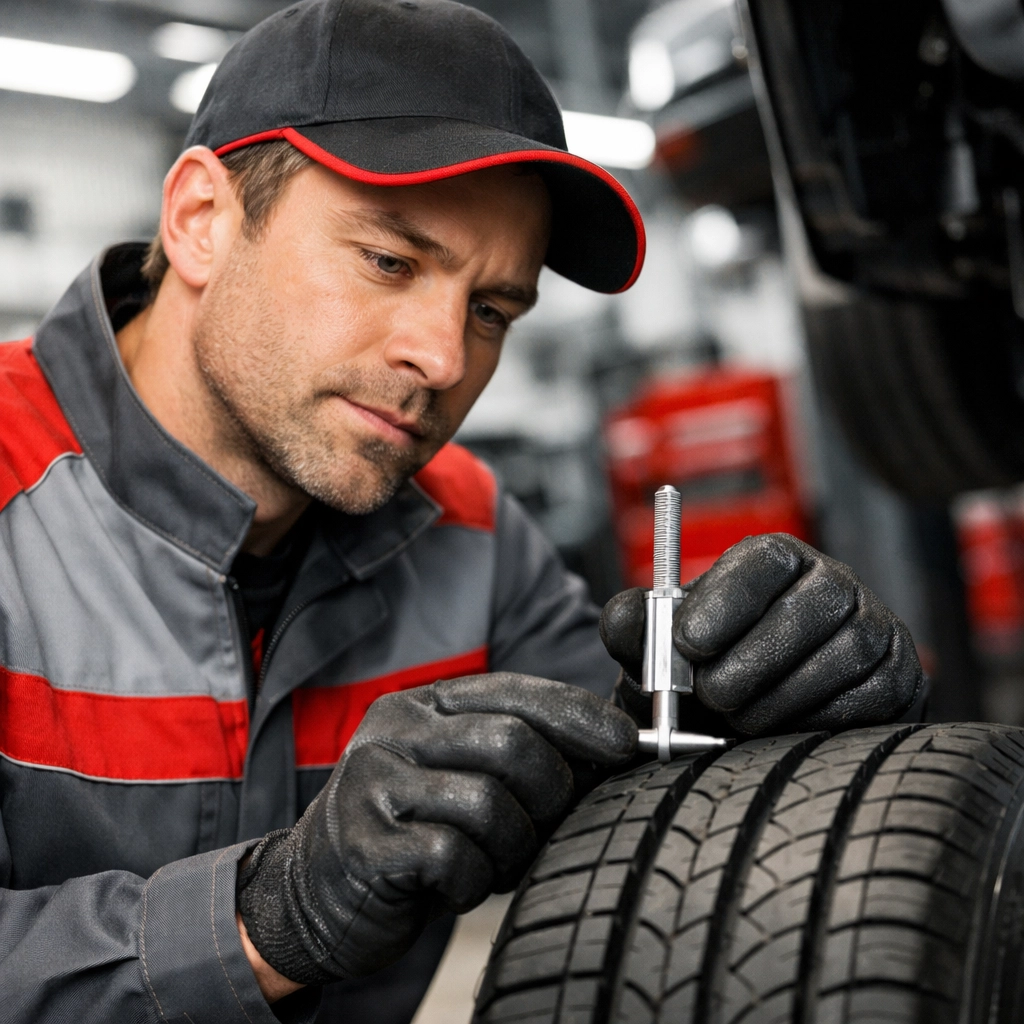
The Solution: While 2/32″ of tread is the legal limit, we recommend considering new tires when you hit 4/32″, especially before the peak of summer. Visit us for professional tire repair deming nm or a tread assessment to see if your tires are truly ready for the heat.
7. Waiting for a Crisis to Seek Maintenance
The biggest mistake many drivers make is treating tire care as a “reactive” task rather than a “preventive” one.
The Problem: Waiting until you have a flat or a visible bulge to visit a shop.
The Consequence: Reactive maintenance is almost always more expensive and dangerous. A blowout at highway speeds can cause significant damage to your vehicle’s wheel well, suspension, and body: not to mention the risk to your safety.
The Solution: Establish a relationship with a trusted advisor. Routine rotations every 5,000 to 7,000 miles allow a technician to spot early warning signs like uneven wear, embedded nails, or heat damage before they become emergencies. If you can’t make it into the shop, our mobile tire repair deming nm service can bring the expertise to your driveway or job site.
Confidence and Control on the New Mexico Roads
Your tires are the foundation of your vehicle’s safety. In a place as beautiful but demanding as Deming, NM, they require a little extra attention to combat the effects of the sun and heat. By avoiding these seven common mistakes, you aren’t just saving money on replacements; you’re ensuring that your family commutes and ranching operations stay on schedule and out of danger.
At Big Sky Tire & Repair, we pride ourselves on being more than just a shop; we’re your partners in road safety. Whether you need a quick pressure check, a precision alignment, or emergency roadside help, we have the tools and the local expertise to keep you moving.
Don’t let the heat get the best of your tires this season. Take control of your vehicle’s health today. If you have questions about your tire condition or need a professional eye to check for heat damage, come see us or give us a call. We’re here to help you drive with confidence.